If you've been considering inner child healing, you've probably discovered that there are quite a few ways to approach it. From self-directed online courses and guided workbooks to practitioner-led mentorships and therapeutic programs, the options can vary considerably in their approach, structure and level of support.
Choosing the right program is about more than finding a collection of meditations, journaling exercises or inner child activities. It's about finding an approach that helps you understand how your childhood experiences have influenced the person you've become, while giving you practical ways to create change in your adult life.
Some programs are designed for independent exploration, while others offer a more personalised experience with a practitioner who can guide you through the process.
Neither is necessarily better. The right choice depends on what you're looking for, how much support you need and what you're hoping to achieve.
Here are seven things worth considering when comparing online inner child healing programs.
1. Look at the structure, not just the content
It's easy to be drawn to a program that promises access to dozens of videos, worksheets, meditations and activities. But more content doesn't necessarily mean a better healing experience.
Consider how the material is organised and whether there is a clear progression through the work.
Does the program take you through an intentional process, or does it simply provide a collection of exercises to work through in your own time?
Meaningful inner child work often involves developing an understanding of your childhood experiences, recognising how these have influenced your beliefs and responses, and learning how to meet your emotional needs differently as an adult.
A well-structured program should help you connect these different aspects rather than leaving you to piece everything together yourself.
2. Consider the practitioner's qualifications and experience
Inner child healing can bring up some deeply personal experiences. It's worth knowing who has developed the program and what experience they bring to the work.
Look beyond professional titles and consider:
What formal training and qualifications does the practitioner have?
Do they have experience working with childhood trauma and attachment-related difficulties?
Do they understand the relationship between childhood experiences and adult relationships?
Is their approach grounded in an established therapeutic framework, or is it primarily based on personal beliefs and experiences?
Have they healed their own inner child - have they experienced the deep grief of personal awakening?
There are different approaches to inner child healing, and practitioners may draw on counselling, psychology, attachment theory, somatic practices and complementary therapies.
You don't necessarily need someone with the longest list of qualifications. You do want someone whose training and personal experience are relevant to the work you're undertaking.
3. Understand whether the program addresses attachment
This is an important distinction when comparing inner child healing programs.
Childhood experiences don't simply disappear when we become adults. Our early relationships can influence how we experience emotional closeness, trust, intimacy, conflict and rejection.
Attachment theory provides a framework for understanding how our early relationships with caregivers can influence the way we relate to ourselves and others throughout adulthood.
For example, you might recognise that you:
Find it difficult to trust others or feel emotionally safe in relationships.
Seek reassurance or validation from other people.
Prioritise other people's needs at the expense of your own.
Withdraw when relationships become emotionally uncomfortable.
Struggle with boundaries or expressing your needs.
Experience feelings of rejection or abandonment more intensely than you'd like.
An inner child program that incorporates attachment-focused work can help you understand the connection between your early experiences and your adult relationships.
Rather than concentrating exclusively on revisiting childhood memories, it can help you recognise what you learned about love, acceptance, safety and your own worth, and how those beliefs may still influence your life today.
If relationships and attachment difficulties are among the reasons you're considering inner child healing, look for a program that addresses these areas directly.
4. Decide how much personal support you need
One of the biggest differences between online inner child healing programs is the level of practitioner involvement.
Some are entirely self-led, while others include individual sessions, personalised guidance or ongoing communication with a practitioner.
A self-led program may be suitable if you:
Enjoy working independently.
Are comfortable reflecting on your own experiences.
Prefer to work at your own pace.
Have some familiarity with personal development or inner child work.
Want an affordable starting point.
A mentored approach may be more appropriate if you:
Would benefit from having someone guide you through the process.
Want to explore your experiences in greater depth.
Find it difficult to identify what needs attention or where to begin.
Would value personalised feedback and support.
Want to work towards more specific changes in your relationships and life.
It's also worth checking what support actually means within a program. Does it include scheduled individual sessions, or is it simply access to a practitioner for occasional questions?
These are quite different experiences, and the distinction should be clear before you commit.
5. Compare self-led programs with mentored approaches
There is no single pathway to inner child healing. For some people, working independently is exactly what they need. Others benefit from having a practitioner alongside them.
Here's a general comparison:
Self-led programMentored programWork through material independentlyReceive individual practitioner guidanceUsually work at your own paceFollow a more structured processGenerally more affordableHigher investment due to individual supportGreater flexibilityDedicated time and accountabilityLimited personal feedbackOpportunity to explore individual experiencesResponsibility for your own progressPractitioner helps guide your progress
One option is to begin with a self-led program and move into individual mentorship if you decide you'd like more personalised support.
For example, my Journey to Wholeness program is an eight-week, self-led inner child healing experience. It provides structured material and guided reflection to help you understand your childhood experiences and begin addressing the ways they may still influence your adult life.
For those wanting a more personalised experience, my 3 Month Inner Child Mentorship offers a deeper, attachment-focused approach with individual sessions and ongoing support.
Both are available online Australia-wide, so you don't need to be located on the Gold Coast to participate.
6. Be realistic about the cost and time commitment
Price is naturally going to influence your decision, but it's worth considering what you're actually receiving for your investment.
A low-cost program may provide valuable information and exercises, but it may not include personal support. A more expensive mentorship generally involves a greater time commitment from the practitioner and a more individualised experience.
When comparing costs, consider:
Is the program a one-off payment or an ongoing subscription?
How long will you have access to the material?
Are individual sessions included?
Is there additional support between sessions?
Are there extra costs for resources or supplementary sessions?
How much time will you realistically need to set aside each week?
Also consider the time required to put what you're learning into practice.
Inner child healing isn't simply about completing a program or working through a workbook. Understanding your experiences is one part of the process. Applying that understanding to the way you think, feel, communicate and make decisions is where meaningful change begins.
Choose something that fits your current circumstances and that you can realistically commit to.
7. Make sure the approach aligns with what you want to change
Perhaps the most important consideration is whether the program addresses the reasons you're seeking inner child healing in the first place.
You might want to improve your relationships, develop greater self-worth, stop people-pleasing, establish healthier boundaries or feel more confident making decisions.
Or perhaps you have reached a point where you know that something from your childhood is still influencing your life, but you aren't quite sure how to change it.
Look at the outcomes the program is designed to support.
Does it focus primarily on understanding childhood experiences, or does it also help you translate that understanding into changes in your adult life?
Does it acknowledge the connection between your inner world, your relationships and the choices you make?
A good program shouldn't promise to resolve every difficulty or offer a quick fix. It should provide a meaningful framework, appropriate guidance and practical opportunities to work towards the changes you want to make.
Finding the right inner child healing program for you
There is no requirement to choose the most intensive or expensive option. Nor do you need to commit to a lengthy mentorship if you're simply looking for somewhere to begin.
The important thing is to choose an approach that meets you where you are while providing enough structure and support to help you move forward.
If you enjoy independent learning and want a structured introduction to inner child healing, a self-led program may be a good starting point.
If you're looking for a more personalised experience, particularly if childhood experiences are influencing your adult relationships, self-worth or sense of identity, working with an experienced practitioner may offer greater depth.
Explore your options with The Creation Space
At The Creation Space, I offer two approaches to inner child healing, depending on the level of guidance and support you're looking for.
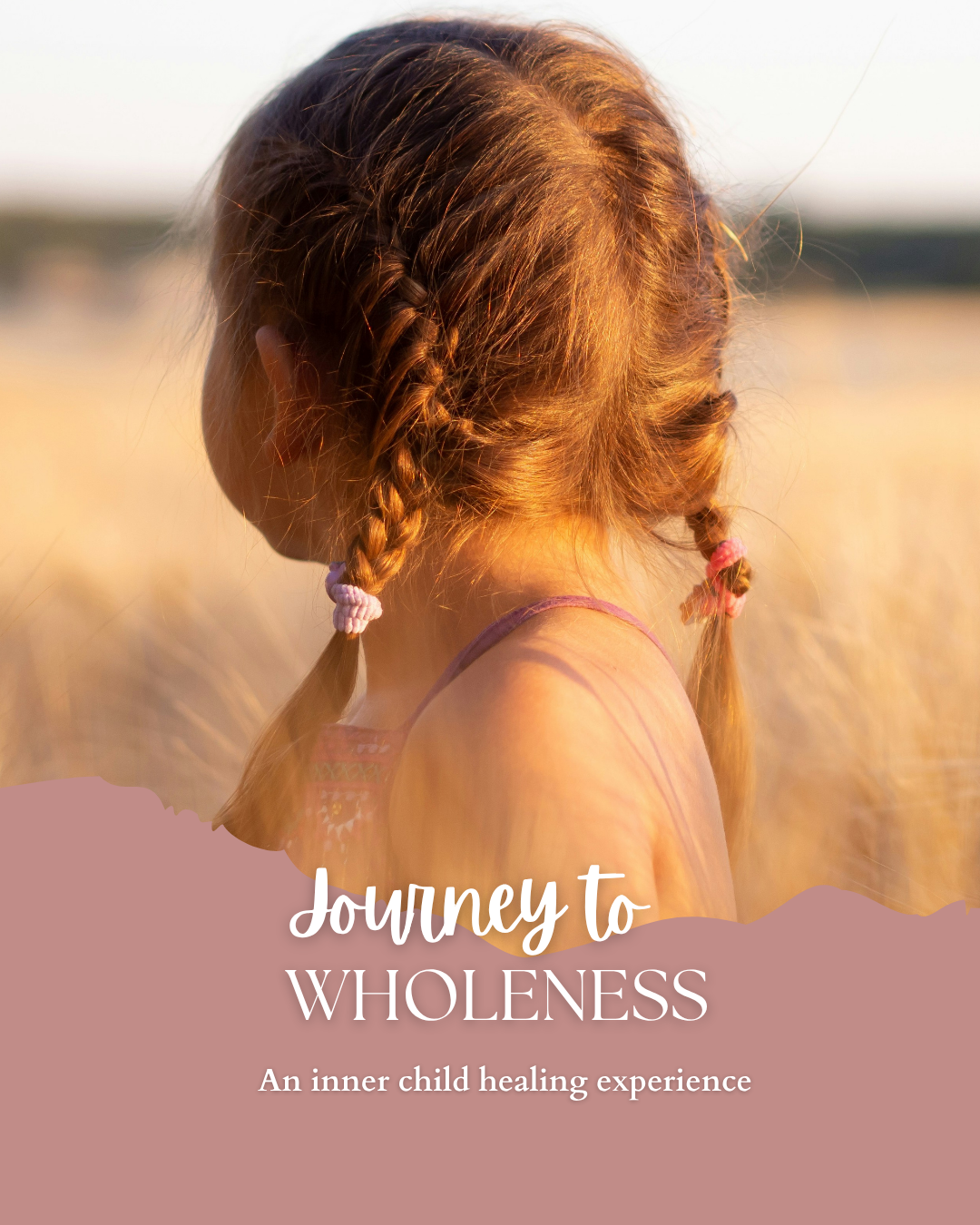
A self-paced introduction to inner child healing, with structured learning, reflective exercises and guided visualisations to help you develop a deeper understanding of yourself and your childhood experiences.

A more personalised, attachment-focused experience combining individual sessions, inner child work and ongoing support. Together, we work towards understanding and releasing the influence of childhood experiences, strengthening your sense of self-worth and creating healthier ways of relating to yourself and others.
Both options are available online Australia-wide.
You don't have to spend the rest of your life being influenced by experiences you had as a child. Understanding where your beliefs and behaviours originated can give you the opportunity to make different choices as an adult.
It's not about changing who you are. It's about recognising what you've carried, reclaiming your sense of self and creating a life that reflects who you want to be now.
